How to avoid vinyl siding melting is a primary concern for homeowners and builders who prioritize long-term exterior durability. Modern luxury vinyl siding offers aesthetic appeal and low maintenance, but it remains susceptible to high-intensity heat concentrations. Understanding the intersection of material science and environmental factors is essential for preserving structural integrity.
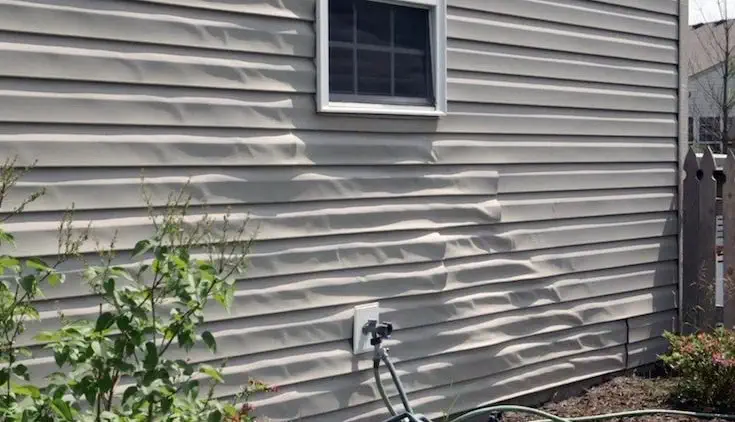
The phenomenon of distorted or warped siding often stems from concentrated solar energy. This energy typically originates from high-efficiency windows that reflect sunlight onto adjacent surfaces. Without strategic prevention, the thermal threshold of polyvinyl chloride can be exceeded quickly. This leads to permanent deformation that compromises the home’s protective envelope.
Professional property managers and savvy homeowners must view siding protection as a systemic issue. It involves more than just selecting a high-quality product; it requires managing the entire microclimate around the structure. Addressing these variables ensures that luxury siding maintains its profile and color for decades. This guide explores the technical and practical pathways to total heat mitigation.
How To Avoid Vinyl Siding Melting
The Core Essence Of Thermal Protection
At its core, the challenge of vinyl distortion is a matter of thermal energy management. Imagine a magnifying glass focusing a beam of light onto a specific point. Modern high-efficiency windows, particularly those with a slight concave bend, act exactly like that lens. They concentrate solar radiation into a “hot spot” that can reach temperatures far exceeding the siding’s melting point.
Professional installers distinguish between ambient heat and concentrated heat. Siding is designed to withstand high summer temperatures across its entire surface. However, it is not engineered to handle localized beams of energy that exceed 160 degrees Fahrenheit. The goal of any prevention strategy is to disrupt this concentration of energy before it reaches the PVC surface.
Professional Interpretations And Common Misunderstandings
In the architectural community, there is often a debate regarding whether the siding or the window is “at fault.” Most professionals now agree that melting is a situational synergy rather than a manufacturing defect. Avoiding these failures requires an integrated approach to building design. Misunderstanding the role of solar reflection often leads to expensive, repetitive repairs.
Many people incorrectly assume that only dark-colored siding is at risk. While dark pigments absorb more heat, the intensity of reflected sunlight can melt even white or light-colored panels. The focus should remain on the source of the reflection and the angle of the sun. Developing a “solar-aware” mindset is the first step toward long-term protection.
Strategic Foundations For Heat Mitigation
Effective prevention strategies rely on breaking the path of reflection. This can be achieved through physical barriers, material adjustments, or landscape alterations. Professionals use “shadow mapping” to identify potential high-risk zones during different seasons. By anticipating the sun’s path, one can implement targeted solutions that do not compromise the home’s aesthetics.
The Evolution Of Siding Material Standards
Historical Context Of Exterior Cladding
Exterior cladding has evolved from natural wood and masonry to advanced polymers. Early vinyl siding was prone to fading and becoming brittle under UV exposure. Manufacturers responded by introducing chemical stabilizers and better pigments. These improvements increased the lifespan of the material but did not eliminate the vulnerability to concentrated heat sources.
In the late 20th century, the introduction of Low-E glass changed the landscape of home efficiency. While these windows successfully keep interiors cool, their reflective coatings inadvertently created heat-related issues for neighboring surfaces. This unintended consequence forced the siding industry to rethink installation and protection protocols. We are currently in an era where architectural coordination is mandatory for material safety.
Transitioning To Modern Luxury Vinyl
Modern luxury vinyl siding is thicker and features more complex chemical compositions than its predecessors. These products often include acrylic modifiers that improve heat resistance. However, the fundamental physical properties of PVC still dictate a specific thermal limit. The “modern standard” involves using siding with a higher Heat Distortion Temperature (HDT) in combination with reflective-control measures.
Older installation techniques often ignored the proximity of secondary structures or neighboring homes. Today, the industry emphasizes “thermal clearance” and the use of heat-dispersing technology. This shift represents a move toward holistic building science. Professionals now evaluate the entire environment rather than just the individual components of the wall assembly.
Conceptual Frameworks And Mental Models
The Thermal Triangle Framework
The Thermal Triangle is a mental model used to evaluate risk. The three sides are the Energy Source (the sun), the Reflector (the window), and the Target (the siding). To prevent melting, one must disrupt at least one side of this triangle. For example, installing a screen on a window removes the Reflector’s efficiency, breaking the cycle of heat concentration.
For homeowners, this framework simplifies complex physics into actionable steps. If you cannot move the sun and you cannot move the house, you must modify the reflector or protect the target. This logic prevents wasted investment in solutions that do not address the root cause of the heat concentration.
The Barrier Vs Reflection Model
This model helps professionals decide between stopping heat at the source or shielding the surface. A barrier might be a strategically placed tree or a trellis that blocks the light path. Reflection management involves altering the window’s surface to diffuse the light. Both approaches are valid, but the choice depends on the specific architectural constraints of the property.
Using this model prevents “decision fatigue” when faced with multiple products. If the reflection is coming from a neighbor’s window, a barrier on your property is the only controllable variable. If the reflection is from your own window, reflection management is usually the more cost-effective and aesthetic route.
Key Types Approaches And Nuances
Categories Of Heat Resistance
Not all vinyl siding products are created equal regarding thermal performance. Some luxury lines utilize “heat-reflective” pigments that bounce away a portion of the infrared spectrum. Others rely on increased mass and insulation backing to provide structural rigidity. Understanding these nuances is vital for how to avoid vinyl siding melting in high-risk environments.
Polypropylene siding, often used for cedar-shake aesthetics, has a different thermal profile than standard PVC. It may resist melting slightly longer but can still warp under extreme conditions. Identifying the exact polymer composition helps in selecting the right mitigation strategy. Each material type presents a different set of trade-offs regarding cost, appearance, and durability.
| Variation | Target Audience | Core Advantage | Trade-offs | Relative Complexity |
|---|---|---|---|---|
| Standard Vinyl | Budget-conscious | Low initial cost | Lower heat threshold | Low |
| Heat-Reflective Luxury | High-end residential | Infrared-reflecting pigments | Premium pricing | Moderate |
| Insulated Vinyl | Energy-efficient focus | Added structural rigidity | Bulky profile | Moderate |
| Polypropylene Shakes | Aesthetic-driven | Superior texture and look | Higher expansion rate | High |
Decision Logic For Material Selection
Choosing the right siding involves balancing the climate profile of the region with the local architectural density. In suburban areas where houses are close together, the risk of “cross-reflection” is significantly higher. In these cases, investing in heat-reflective luxury vinyl is a proactive step. If the home is isolated with plenty of natural shade, standard vinyl may suffice with minimal risk.
Real-world Scenarios And Decision Trees
The Neighbor Reflection Dilemma
A common scenario involves a neighbor installing new high-efficiency windows. The reflection from their house begins to warp the siding on your home. Since you cannot control their windows, the solution must be defensive. Installing a perimeter fence or tall landscaping can create a permanent shadow over the vulnerable area.
The second-order consequence of this situation is often a legal or social dispute. Taking proactive measures like installing a decorative sunshade is often cheaper than litigation. It also provides immediate protection before the damage becomes structural. Addressing the light path is more effective than simply replacing the warped panels.
The Grill Proximity Failure
Homeowners often place gas grills too close to the house. The convection heat from the grill can quickly exceed the 160-degree threshold of vinyl siding. This is a classic example of a direct heat source causing failure. The recovery step is simple: maintain a minimum of ten feet of clearance between heat-producing appliances and the siding.
Failure to follow this rule can lead to “flash melting” where the material deforms in minutes. If this occurs, the underlying house wrap and sheathing must be inspected for heat damage. Simply replacing the siding without changing the grill’s location will result in a repeated failure. Proper spatial planning is a zero-cost method for how to avoid vinyl siding melting.
Planning Cost And Resource Dynamics
Direct Versus Hidden Costs
The direct cost of heat-damaged siding includes the materials and labor for replacement. However, the hidden costs are often more significant. These include the potential for water intrusion behind warped panels, which can lead to mold and rot. Additionally, mismatched color batches in replacement panels can decrease the overall curb appeal and resale value of the home.
Investing in prevention is almost always more economical than repair. For instance, a window screen costing fifty dollars can protect a siding installation worth twenty thousand dollars. Opportunity costs also arise when homeowners must spend time managing contractors instead of enjoying their property. Budgeting for “thermal insurance” through landscaping or screens is a sophisticated financial move.
| Category | Entry-Level Scenario | Professional Standard | Enterprise/High-End | Key Nuance |
|---|---|---|---|---|
| Cost Barrier | DIY Window Screens | External Solar Shades | Automated Awnings | Maintenance varies |
| Material Choice | Standard Grade | High-HDT Polymers | Fiber Cement Hybrid | Aesthetics vs Durability |
| Landscaping | Small Shrubs | Mature Privacy Trees | Structural Trellises | Growth time matters |
Efficiency In Operational Waste Reduction
Operational waste occurs when materials are discarded prematurely due to avoidable damage. To reduce this waste, builders should implement a “Solar Impact Analysis” during the planning phase. This involves checking the orientation of the house and the position of neighboring structures. Cutting waste begins with the realization that “cheap” siding in a high-heat zone is an expensive mistake.
Tools Strategies And Ecosystems
The Professional Toolkit For Heat Management
The most effective tool for preventing reflection damage is the full-mesh window screen. By covering the entire glass surface, the screen diffuses the sunlight, preventing it from focusing into a concentrated beam. This strategy is highly effective because it treats the problem at the source. It is also an unobtrusive solution that maintains the window’s functionality.
Another strategic tool is heat-diffusing window film applied to the exterior of the glass. Unlike interior films, exterior versions prevent the glass from heating up and reflecting energy outward. Professionals must ensure the film is compatible with the window’s warranty. These films are a centerpiece in the ecosystem of how to avoid vinyl siding melting.
Integrating Solutions Into The Home Ecosystem
A holistic approach integrates these tools into the home’s overall design. For example, a pergola can provide shade to a vulnerable wall while also enhancing the outdoor living space. By layering multiple strategies—such as heat-reflective siding, window screens, and landscaping—you create a “defense-in-depth.” This reduces the reliance on any single solution and provides a safety margin for unexpected weather patterns.
Risk Landscape And Failure Modes
The Risk Taxonomy Of Vinyl Distortion
Risks can be categorized as structural, operational, or environmental. Structural risks involve poor installation where siding is nailed too tightly, preventing it from expanding and contracting. When heat hits these restricted panels, they buckle even faster. Operational risks include placing heat sources like fire pits or generators too close to the walls.
Environmental risks are the most difficult to control, such as record-breaking heat waves or changes in neighboring properties. Understanding how small errors, like a missing screen, compound with a high sun angle is crucial. These failures often happen during specific “high-noon” windows of time when the sun is at a precise angle relative to the glass.
Compounding Failures And Systemic Leaks
When siding melts, it often pulls away from the J-channel or starter strip. This creates gaps where driving rain can enter the wall cavity. A small thermal failure can therefore lead to a major moisture problem. This is why immediate mitigation is necessary. Leaving warped siding in place is not just an aesthetic issue; it is a breach of the home’s primary weather barrier.
Governance Maintenance And Sustainability
Preserving Quality Through Dynamic Adaptation
Static systems fail because the environment is always changing. A tree that provided shade five years ago may have been pruned or died. A neighbor might have removed an awning that was unintentionally protecting your siding. Maintenance requires a “dynamic adaptation” approach where the homeowner periodically reassesses the exterior for new hot spots.
Sustainability in siding means extending the product’s life to the maximum possible duration. Replacing vinyl every five years due to melting is environmentally irresponsible and financially draining. By managing the thermal environment, you preserve the chemical integrity of the PVC. This prevents the premature release of materials into the waste stream.
- Conduct a “Reflection Walk” twice a year during peak solar hours.
- Inspect window screens for tears or sagging that might allow reflections.
- Verify that all siding panels have at least 1/4 inch of expansion room.
- Monitor the growth of shade-providing vegetation near the structure.
- Check for “glossing” on siding, which is an early sign of heat stress.
Measurement Kpis And Evaluation
Tracking Success In Thermal Mitigation
Success is measured by the absence of material deformation over time. However, professionals use leading indicators to predict performance. A primary leading indicator is the surface temperature of the siding during peak sun. Using an infrared thermometer, a professional can identify if a specific area is approaching the 160-degree danger zone before visible damage occurs.
Lagging indicators include the number of panels replaced and the frequency of service calls. A successful mitigation plan should result in zero “heat-related incidents” over a five-year period. Documentation of these measurements is helpful for warranty claims and for proving the home’s value during a sale. It demonstrates a level of care that goes beyond basic maintenance.
Proving Success To Stakeholders
For a professional, proving the effectiveness of a strategy involves showing the temperature differential. If a screened window results in a siding surface temperature of 110 degrees, while an unscreened one would have produced 170 degrees, the proof is undeniable. This data-driven approach removes the guesswork and builds trust with homeowners or property boards.
Common Misconceptions And Myths
Debunking The Dark Color Myth
A common myth is that dark colors are the sole cause of melting. While dark colors absorb more ambient heat, the primary cause of melting is concentrated reflection. Light-colored siding can and will melt if subjected to the “magnifying glass” effect of a Low-E window. Focusing only on color choice is a mistake that leaves the home vulnerable to reflection-based damage.
Another misconception is that “high-end” siding is immune to melting. No matter the cost, PVC and polypropylene have physical thermal limits. Thinking that a higher price tag replaces the need for solar management is a dangerous assumption. Professional-grade products provide better UV resistance and color fastness, but they still require a safe thermal environment.
The Truth About “heat-proof” Paints
Some claim that painting vinyl with special “cool” paints will prevent melting. While these paints can reduce the surface temperature by a few degrees, they often do not address the intensity of concentrated solar beams. Furthermore, painting vinyl can void the manufacturer’s warranty and may lead to peeling if the siding expands at a different rate than the paint film. Mechanical shade is always superior to chemical coatings.
Ethical Contextual And Practical Limits
Navigating The Gray Areas Of Property Rights
When a neighbor’s windows are the cause of the damage, the ethical and legal landscape becomes complex. Most jurisdictions do not have specific “reflection laws.” This means you must rely on cooperation or defensive measures on your own property. It is a practical limit of modern high-density living. Understanding these boundaries helps in choosing the most realistic path forward.
In some extreme climates, such as the high-altitude deserts, vinyl may not be the optimal choice regardless of the mitigation strategy. The intense UV and rapid temperature swings can push the material to its limits. In such cases, professionals must honestly assess whether a different material, like fiber cement, would be a more sustainable and ethical recommendation for the client.
Constraints Of The Current Era
We live in an era of increasing energy efficiency standards for windows. As these standards become stricter, the reflections they produce may become even more intense. This creates a permanent constraint for the vinyl siding industry. The burden of protection has shifted from the material manufacturer to the architectural designer and the homeowner. Adapting to this reality is the only way to ensure the longevity of vinyl exteriors.
Conclusion And Logic Synthesis
Successfully managing how to avoid vinyl siding melting requires a synthesis of material awareness and environmental control. It is not enough to simply buy the best siding; one must understand the solar dynamics of the entire property. By identifying potential heat sources and disrupting the path of concentrated energy, you protect the home’s aesthetic and functional value.
The balance between human judgment and systemic process is the key to exterior longevity. Whether it is through the strategic use of window screens, the careful placement of landscaping, or the selection of high-performance polymers, prevention is a multi-layered effort. A proactive approach transforms a potential liability into a manageable aspect of home maintenance.
Ultimately, the durability of luxury vinyl is a reflection of the care taken during the planning and maintenance phases. As building materials and environmental conditions continue to evolve, the principles of thermal management remain constant. Mastering these concepts ensures that a home remains a resilient and beautiful sanctuary against the elements.
Frequently Asked Questions
Can I Use Window Film On The Inside To Stop Siding Melting?
No, interior window films do not stop the glass from reflecting solar energy outward. To protect your siding, you must use an exterior-grade film or a full-coverage window screen to diffuse the light before it bounces off the glass surface.
At What Temperature Does Vinyl Siding Start To Deform?
Standard vinyl siding begins to reach its Heat Distortion Temperature at approximately 160 to 165 degrees Fahrenheit. Once the material reaches this point, it loses its structural rigidity and will warp or “smile” permanently as it cools down.
Does Insurance Cover Melted Vinyl Siding?
Insurance coverage for melted siding varies by policy and cause. Many standard policies view solar reflection as an environmental or maintenance issue rather than a sudden “peril,” so it is often excluded. Checking with your specific provider is recommended for clarity.
Will Planting Trees Really Help Prevent My Siding From Melting?
Yes, strategically placed trees or tall shrubs provide a natural barrier that blocks the sun’s path to the reflective surface or the siding itself. Deciduous trees are particularly effective as they provide shade in the summer when the sun is most intense.
Is Fiber Cement Siding A Better Option To Avoid Melting?
Fiber cement is a non-combustible material that does not melt or warp under solar reflection. While it is more expensive and requires more maintenance (painting) than vinyl, it is an excellent alternative in high-risk zones where heat management is impossible.